Before your container arrives
Delivery and
site prep
Delivery day takes minutes when the spot is ready. Here is exactly what we check, what you need to prepare, and how the tilt bed drop works.
Our own trucks · our own drivers · 250 mile radius from Reno
The rules of thumb
What the truck needs
These are rules of thumb. Every property is different, and our drivers have placed containers in plenty of spots that looked impossible on paper. Tell us what you are working with and we will give you a straight answer.
Feet of straight run, 20 ft box
Feet of straight run, 40 ft box
Feet of clear width, gates included
Feet of overhead for the tilt bed
Three steps, in order
From the phone call to the pad
We check access first, you prepare a level base, and the tilt bed does the rest. The driver confirms the doors open and close cleanly before leaving.
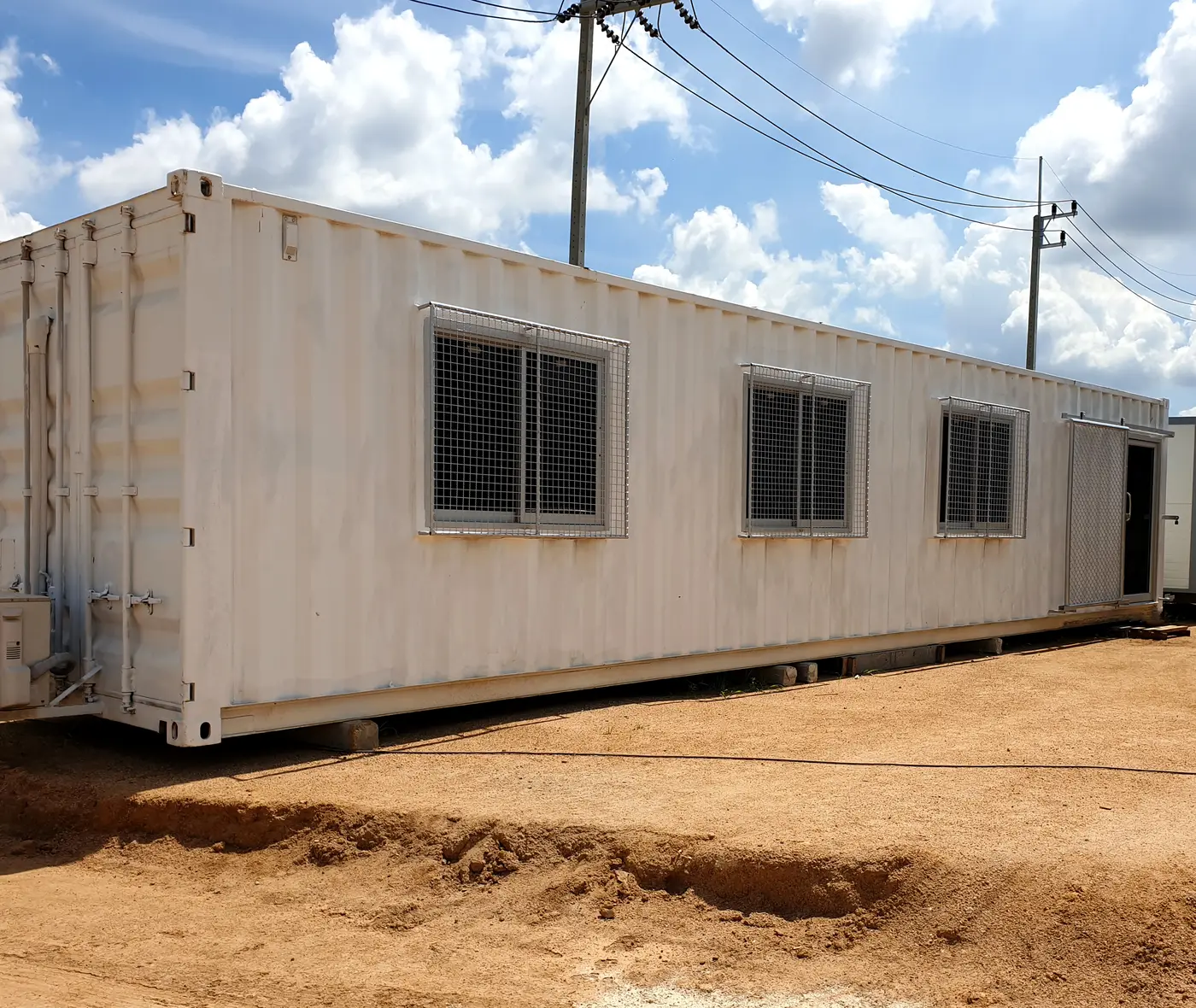
We check access first
Before anything is scheduled we talk through where the container is going and look at the property on the map, so tight turns, narrow gates, soft or sloped ground, low limbs and overhead lines are handled before the truck leaves the yard. If something looks questionable we tell you then, not on delivery day.
You prepare a level base
A container is strong at its corners. On a level base the doors swing open with one hand for decades; on ground that slopes or settles the frame racks and the doors bind. Ground prep is the buyer’s job and it is the part that matters most. We are glad to advise on what works.
Delivery day
Your container arrives on a tilt bed truck. The driver backs into position, tilts the bed, and the container slides off onto your pad as the truck pulls forward. Once it is set, the driver checks that the doors open and close cleanly before leaving.
Preparing a level pad is the buyer’s responsibility
What to put under it
A container is strong at its corners. On a level base the doors swing open with one hand for decades; on ground that slopes or settles the frame racks and the doors bind. We do not grade or level sites, but we are glad to advise on what works.
Gravel or decomposed granite
The most common base. A compacted pad of three quarter inch gravel or DG, a few inches deep and a little larger than the container footprint, drains well and is easy to level.
Footings or piers
Concrete blocks, pier pads or railroad ties under the four corners, and at the mid-points on a 40 ft, raise the box off the ground and make fine leveling easy.
Concrete slab
The premium option if the container is permanent or you want a clean floor around it. Pour it level and slightly larger than the container.
Railroad ties
A practical, inexpensive choice on rural ground. Set ties on compacted soil, check them with a level, and the container rests on top.
Drainage tip
Whatever base you choose, keep the container a few inches off the soil and let water run away from it. A dry base is a level base, year after year.
Delivery day checklist
Have this ready
- A level, compacted base a little larger than the container footprint
- Gates open and vehicles moved out of the approach path
- Low limbs trimmed and overhead lines identified
- Soft or muddy ground allowed to dry, or a gravel path laid down
- Someone on site, or a clear marking of exactly where the doors should face
- Your phone on, in case the driver has a question on the way
Where we deliver
Reno, and 250 miles out
Reno and Sparks are the core. From there the trucks run the I-80 corridor and the high desert, across northern Nevada and over the Sierra into California.
Reno · Sparks · Carson City · Fernley · Fallon · Truckee and Tahoe · Las Vegas
Common questions
The four we get every week
Anything not answered here, call the yard at (775) 924-1344 and ask.
Do you level the ground for me?
No. Ground prep is the buyer’s job, and it is the part that matters most. A level, well-drained base keeps the doors swinging freely for the life of the container. We are happy to talk through options before delivery.
How much room does the delivery truck need?
As a rule of thumb, plan on a straight, clear run of about 60 feet for a 20 ft container and 100 feet for a 40 ft, about 12 feet wide, with 14 feet of overhead clearance. We confirm the specifics for your site before we schedule.
Can the container sit directly on dirt?
It can, but we do not recommend it. Bare soil shifts with moisture and frost, which twists the frame and binds the doors. Gravel, decomposed granite, footings or a slab keep it level and let water drain.
Can you place it in a tight spot?
Usually, yes. Our drivers have set containers in tight driveways and side yards for years. Tell us about the spot up front and we will tell you honestly what will work.
Ready to schedule?
BE SPOT ON.
Tell us your delivery address and the size you need. We check access, confirm the price and set a delivery date.